Rack Labs

3D motion analysis, mounted on the power rack

The rack that
measures the lift.

RackTracker is a 3D motion-analysis device that mounts on a gym power rack. Three cameras fixed to the rack fire at the same instant, and a small computer beside the rack rebuilds every joint in 3D and returns biomechanical feedback after each set.

RackTracker

A 3D motion-analysis device that mounts on the power rack

Three global-shutter cameras fixed to the rack fire on one electrical trigger. The joints found in each view are intersected from three directions, and when one view is occluded the other two carry it, which gives cm-level 3D coordinates.

Every set is logged as center-of-mass shift, left-right asymmetry, trunk lean and squat depth, and handed back to the member and the trainer. Thresholds are set per person from body proportions.

Because the setup never changes, a new session compares with the last one on the same footing. Processing finishes on the computer beside the rack, on a closed network, so member video never leaves the gym.

Shutter skew across three cameras
0.12 msmeasured with a logic analyzer
Joints recovered with three cameras
70%CMU Panoptic. Standard triangulation: 40%
Joint position error
~3 cmthe same as with two cameras
Where processing runs
NVIDIA Jetson beside the rackclosed network, no video leaves the gym
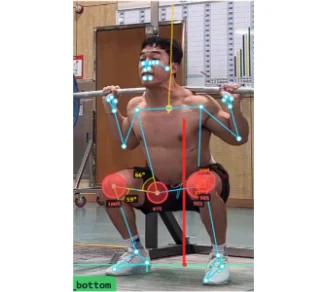
Analysis view of a squat at the bottom position with joint angles and load markers drawn over the lifter
Figure 1. Joint load and center-of-mass analysis.
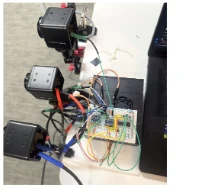
Two camera modules wired to a hand-built trigger board on the edge rig
Figure 2. Trigger board and Jetson edge rig.
  1. NowWorking prototype: three-camera capture, calibration, 3D joint reconstruction and automatic set logging
  2. Q4 2026Validation against marker-based motion capture
  3. H1 2027Gym pilot
  4. H2 2027Production unit

pipeplot

Neural networks,
built layer by layer
in walkable space.

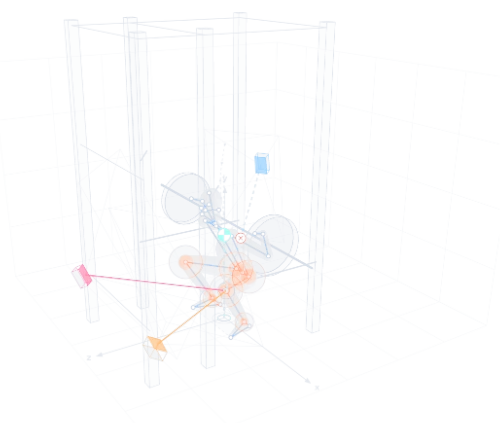
One page per model. Model pages stand real trained weights and activations up in 3D space, and concept pages stack scenes in the order one person came to understand the idea.

Four models so far, AlexNet, VGG-16, GoogLeNet and ResNet-34, plus concept pages. It is growing into a place to learn ML and DL, and a community around it.

agent-workflow-kit

A workflow, a Markdown document store and backstops for repositories where Claude Code does the work

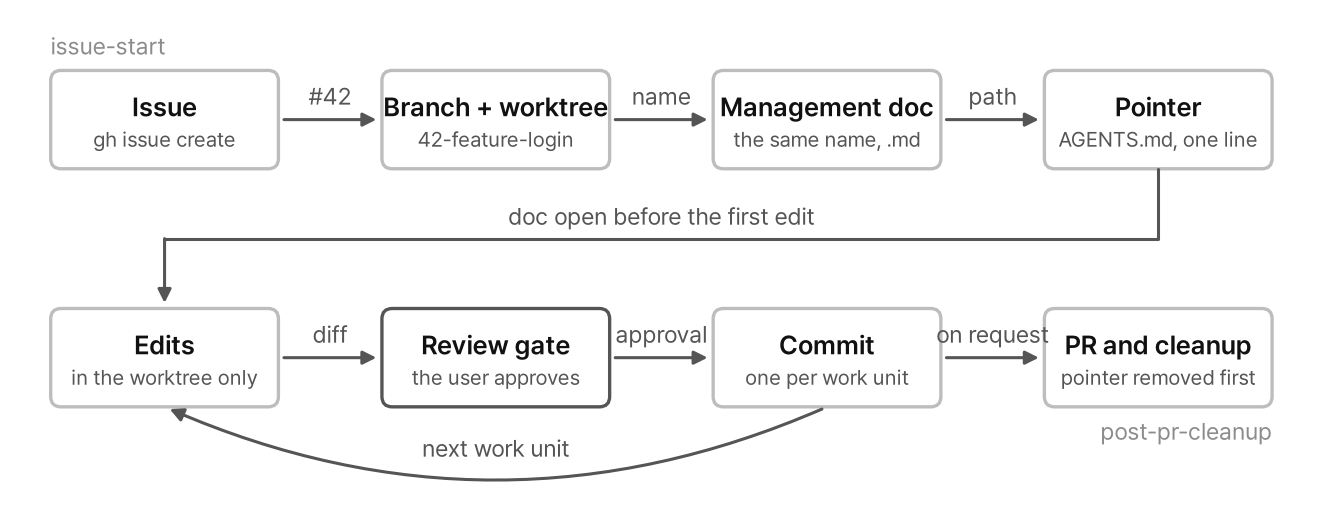
Agent Workflow Kit gives a repository three things: a workflow that turns a request into an issue, a branch and a document, and runs many of them at once on git; a document store kept in Markdown and engineered so the agent's context stays small and true; and backstops that fire when a step was skipped.

This repo is the single source: each target repo gets git-tracked copies through install.mjs, so a fix made here reaches every repo on its next update instead of drifting per copy.

Version
0.2.13updated with the release notes
Skills
9issue-start, post-pr-cleanup, ui-evidence, ko-writing and more
License
MITNode 20 or newer
Flow of one work unit: issue, branch and worktree, management document and pointer, then edits, review gate, commit, and PR with cleanup
Figure 3. One work unit, from issue to cleanup.